Thursday, July 30, 2015

What Would Make The Best Society?

The following answers to this central philosophical question each win a random book.
The closest to perfection would be an interdependent Confederation of societies, each containing between one and two hundred citizens, depending upon factors such as location and climate. These villages would be more or less evenly distributed across the globe, having access to roughly equivalent amounts of arable land. Thirty per cent of all land would be designated wilderness, and no societies would be allowed to colonise these areas, but antisocial individuals would be free to inhabit the wilderness following a life-style of total lonesomeness.
Each society would be run according to a consensus of members, on a Rousseauian model of full participation of all members over 14 and council decree. Dissenting members will be invited to move to alternative societies, set up their own on land proportionate to the size of the dissenting group, or to take to the wilderness. Councils may legislate on shared interests, but there will be no laws restricting private activities provided these do not infringe upon the same freedoms of others.
Whilst each society would decide its own rules, the Confederation would respect a universal constitution according to which no-one can own anything they have not made. Communal products could be exchanged freely amongst individuals or between societies. There would be no money, and no hoarding of mutually-owned resources, on pain of banishment to the wilderness. Every year there would be a Global Festival of Gratitude and Giving, during which gifts would be freely exchanged and art, music, dances and games would celebrate and renew the freedom of the Earth from human domination.
According to the constitution, animals culled from the wild may be eaten during the winter in cold climates and during illness. But there would be no domestication or other infringement upon the freedom of animals. Killing would be allowed only if human life is in danger, or to stabilize populations and environmental harmony. All waste would be recycled, and energy derived only from renewable sources such as wind and tide.
If one society threatens aggression against another, the Global Confederation would boycott it for 50 years. Members would be invited to join alternative societies, but may emigrate only to one that has received no other members of the rogue society. All political relationships will be entirely internal to each society and there would be no alliances formed between societies. Societies attempting to form political allegiances or extend their power beyond their own members will be boycotted. Individuals would be free to travel to and form relationships with individuals of other societies, but any group growing too large for its arable resources would have to redistribute.
Helen Williams, Coley Sirgar, Swansea

The perfect society would be one in which everybody got whatever they wanted. Obviously, this is impossible to achieve. So we can only strive for the best possible society. This logically would be the one in which everyone got as much of what they want as it is possible to equitably achieve. Achieving this would be the equivalent of finding the lines of best fit through a series of points for various graphs. For example, if we all have different opinions about the ideal length of a working day, then in the best society the length of the working day would be the mean of all our ideals. Generally, in the best possible society, all parameters would be set at the average of our individual ideals about that thing. It won’t be the perfect society for anyone, but on the whole, it’ll be the least bad for everyone.
Clearly, there are some huge practical difficulties to achieving this society – so huge as to render the full achievement of it an impossibility. Nevertheless, it is an ideal we can work towards. Indeed, it would seem that society is slowly moving in this direction. The biggest step we have taken in many countries towards this society of the average is the democratic election of leaders – and as our administrations become more transparent and accountable, populations are able to exert greater pressure on their governments to act more in line with the collective will. We can imagine in the not too distant future being able to register our views online and by phone; and thus we will be able to easily and rapidly vote on many more issues than we do currently. Just as we now vote on X-Factor, we might soon be voting on important political issues: where reality TV is currently leading the way, genuine reality will follow on behind. So the best society would involve a whole lot more reality TV.
Kevin Andrew, Tadcaster, North Yorkshire

There will be no government as we currently know it. Government is overkill. We’ve tried it, and for the most part it has failed. Mostly, government is about manipulating political and economic power. It does not produce a good society. To quote Henry David Thoreau in On Civil Disobedience: “I heartily accept the motto, ‘That government is best which governs least’; and I should like to see it acted up to more rapidly and systematically… [further] ‘That government is best which governs not at all’.” There may be courts to mediate disputes. These disputes will be limited to the basics: the only laws needed are laws concerning basic decency and respect, following this formula: No killing or hurting another person or damaging their property. This would included ecological destruction, which damages everyone.
Each local community will cooperate with as many or few other communities as it chooses: nothing will ever be forced. Each communities will produce what it needs. Factories will be owned by the workers, and excess profits will go to support the needed services and the well-being of the community, further excess going to greater projects benefiting the wider world. No community should number more than a few thousand. Any system over a million people will always fail; a community kept under 10,000 will likely succeed. No community will be able to possess the manpower or wealth to threaten other communities.
Kraig Mottar, by Email

The best society would not penalise people, working or not, for disabilities or mental illness. This is not their fault. It would transform its idea of beauty from the Platonically idealistic, discarding ‘ideal forms’ for forms that are both realistic and which embrace humanity’s highest aspirations. Life chances would be evenly distributed rather than a concentrated in the 20-65 age range. No longer would people be thrown on the scrap-heap for being ill, disabled, too old etc: rather, there would be a just way of distributing resources to all. This could be implemented in various ways to adjust to society’s changing needs.
This society would be rights-based but not ignore the need for cultural deviation from norms. Democracy would be a norm; but global society would be wide enough to embrace it in different forms. There may need to be an anarchic element; but educational systems should also help people through life at every step. Big Business would be required to act with equity with regard to product quality and customer service. It would not be so easy to inflict disabilities on people via various ‘suffering pipelines’ such as the army, drug damage, etc: but neither would unjust blame be put on people/companies/societies. Unfortunately, suffering would still exist because the physical world is in a fundamental state of increasing entropy, ie disorganisation.
The general principle is that there would be a massive healing of society in terms of its function andfunctionality. However, social function would be tempered with endless creativity and lots of fun. Society would not be cut on ‘utilitarian’ lines, in the sense of people being shoehorned into the most financially profitable but emotionally profitless careers; instead everybody would be able to develop their capabilities and talents. Thus in this society people would be able to fulfil roles at their level of abilities without ruling out their potential to completely jump out of the box!
Kate Hillier, Colchester, Essex

The best society would be run by nurses. Nurses are the caring profession; theirs is an ethics of caring that will see you from the cradle to the other place.
Just think – all of them with PhDs in caring, taking collegiate responsibility for everything. Thus all waste products wiped up efficiently and carefully disposed of. Similarly, firstly there will be potty training of the finest calibre (warm but directive) even for the potential obsessives in adult life, who will have the best in Cognitive Behavioural Therapy, possibly even by the same nurses – like learning, caring is a lifelong thing, a vocation! And for the psychological dissonances, there will be an empathic ear, an emotional ‘hand’ held tightly, unconditional positive regard!
Nurses, of course, need not be paid handsomely. Having long allowed their consciences to go beyond things like money or self-advancement, they would be the mainstay of a low-cost society. All care would be delivered in the local community, but given sufficient numbers of nurses, bicycles should be all that’s necessary. This would also have the beneficial effect of inducing contentment by provoking images of ‘the good old days’.
It might of course be crossing your mind to ask, What about the non-nurses? Well, in a post-capitalist, Nursist world it only remains for people to be cared for – indeed, to have an entitlement to it: most will carry a ‘cared for’ ration book to be filled in with dates, types, and depths of caring, when last cared for, and so on. The awkward question of what people care about has not yet been resolved, but is being fully discussed by the Nursing Administrative Board.
Due to the huge increase in the techniques of caring, plus, it must be said, a smidgeon of threat – ie, “there’s more than one way in which we can ‘care’ for you” – non-compliance in the new society would mostly be a thing of the past. For the small few whoinsist on self-assertion, there will be well-developed virtual reality alternatives. Here recalcitrants can be placed in a virtual helmet, where they will remain sweet. Consistent with virtual ethics, they must not be abandoned to their ‘other world’, and specially-trained carers will always be at hand to coax them back to reality. Nobody goes without in nursing world.
Liam Clarke, Brighton University

What would make the best society? An aggregate of people living together in a harmonious community with common values and customs. But although this appears an acceptable definition, harmony is a difficult if not impossible state to achieve in society, and the maintenance of harmony invariably impedes the achievement of individual ideals. So this definition is nothing more than an unachievable ideal.
Philosophy has long been a defender of this impossible ideal, yet it seems that many are still confused by the nature of the notion: an ideal may be desirable but wholly unobtainable, especially if it concerns social matters. Plato reported such an unreachable ideal in the Republic, as did More and Bacon; and it is disparaging to their works if one thinks they were so na ïve as to believe that what they wrote could be actualised. Yet people still criticise their work on just this basis.
Maybe a poet could better portray the way things are. D.H. Lawrence says of love: “We have pushed a process into a goal.” Love is an ideal we all wish to acquire; but as Lawrence says, it’s a process not a goal, and to believe it is something to acquire is actually a fallacy. We do not fall in love to reach something and then stop: love is ongoing. So too must we understand social improvement as a process, for if we begin to view the ideal society as a thing we can create, then we’re accepting that we’ll reach a point at which we can go no further, no longer improve. Instead then, we must formulate an ideal and work towards it, knowing that its perfect implementation is unattainable. At least we will be moving in the right direction.
With all this in mind, I offer up the suggestion that we work towards a society where due to advances in technology no one works any more – allowing us to sit around discussing philosophy, eating fine food and drinking fine wine!
Christopher Burr, Southbourne, Dorset

There are two broad categories of society: narcissistic and outward-looking. The first typically involves a search for peace, harmony and pleasure. Fine as these are, the prospect of nothing else until the Heat Death of the universe lacks something. I prefer the more outward-looking search for meaning. This has been approached through religion, which is unfortunately stuck in the Middle Ages. Philosophy has made some technical advances here, but on the big questions we have not advanced beyond the ancient Greeks, who were also the inventors of every modern political system. Advances in art follow technology: a Stone Age Beethoven would not have produced symphonies, as he lacked the orchestra, whose instruments are the products of technological knowledge.
In fact, the only direction in which any substantial advances have been made is through science: so the best society would be one conscientiously advancing through science. This not a new departure, as we are already doing this to some extent – we have already split the atom and put men on the moon.
Science advances through individuals: the Newtons, Darwins and Einsteins formulating new ways of looking at the world; followed by periods of consolidation, which form the basis for the next genius to emerge. There is no formula for producing geniuses, who seem to appear at random, but history does give us a lead. They do not often come from the governing classes, who are busy politicking to maintain status. They do not often come from the bottom of society either, as these are too busy struggling for survival and usually lack the education. Innovation is a middle class affair, and to a great extent so is the consolidation process. The Western mode of society has a proven track record in providing a middle class environment, so its world-wide introduction would therefore be recommended. Unfortunately, ecologists tell us that we’d need the resources of three Earths to bring our present six billion up to a Western lifestyle – so to speed the plough of progress we need to remember Malthus and put quality of life before our present witless chase of quantity.
G.E. Haines, Woodbridge, Suffolk

The best society would exist when a common concern for the collective became intrinsic to individual priorities and choices. It would also be in harmony with the environment. Poverty, disease, warfare and crime would be things of the past.
Such a society would be the result of a collective freedom of thought that had disentangled itself from doom religions, dead philosophies and greedy politicians. The conscious and subconscious fallacies embedded in the primitive mind by the assertions of those taken to be superior would be finally put to rest, especially in the discovery that man’s natural state is not one of war, and neither is Armageddon inevitable. Principles would transcend the national, cultural, religious and political. However, the chief characteristic which would make it better than all the societies we may compare it with, is that it could only exist because it has defeated the possibility of just getting worse.
What makes the best society is also determined by number. A society of one can be the absolute best. A society of two could also be the best. It may be that the best society is determined by the number of good relationships which can exist within it. So before we can say anything about what would make the best society, we must first determine the number of people in it.
Nick Kelly, Eastbourne

In thinking about the best society, I thought of the many noble attempts at creating utopian societies. They range across left- and right-wing, scientific and counter-cultural, and religious concepts. Whether it’s a Brook Farm, a phalanstere or a kibbutz, they all share a common trait: failure.
What of the great attempts by intellectuals to offer models of the best society: Plato’s Calliopolis; More’s Utopia and Marx’s communism, or Bellamy, Morris, St. Simon, Heinlein and Buckminster Fuller? Whatever their merits, they all seem radically and deeply flawed, most significantly, by lacking any truly practical way of instituting the necessary changes to bring those dreams into reality. Even the dystopian cautionary voices and visions of Huxley, Wells, Orwell, Atwood or Lowry seem to be practically far removed from actuality (thankfully).
And then it happened. Something strange occurred to me after watching Pixar’s Wall-E: perhaps humansare the central problem in our inability to realize a utopia. We are the whole reason for utopia – yet we also seem to be the reason why no such attempt is ever realized.
I am uncomfortable with this conclusion because it smacks of misanthropy; but the common element to all the above failed utopian (and dystopian) communities is that they are human-centered. Perhaps, then, the best society isn’t even human. Take this aggressive, self-centered and most destructive species out of the mix, and what’s left? Peace? Utopia? A technoutopia of machines could exemplify the very best of universal moral qualities such as courage, honesty, and, above all else, love. All this from robots. We humans have been building our utopian visions out of the wrong stuff.
Perhaps we need to rephrase the question from “What is the best society?” – a utopia – to “What is a goodsociety?” – an eutopia. What would a good society look like? I submit it would be something like the one Socrates outlined in Book 3 of Plato’s Republic – its members living in harmony with nature and one another. But, as beautiful as that bucolic vision may sound, remember Glaucon’s retort: “Socrates,” he said, “you’ve fashioned a city fit for pigs.” Well, perhaps not pigs, but maybe machines.
Patrick Standen, Burlington, VT

Some suggestions:
1. Population propagation will need to be controlled.
2. There will be workable old and new ways to provide necessary and desirable goods and services.
3. There will be leaders and doers who try to arrange a just distribution of these resources and goods.
4. There will be leaders and doers who try to minimize wars and other conflicts, and also crime.
5. People will sometimes ill-treat others (unfortunately).
6. People will sometimes treat others well.
7. People will sometimes try to develop desirable intellectual and emotional abilities.
8. Wise people will accept stoically what they cannot change, change what they should and can, and strive for wisdom to know the difference.
9. Wise people will tackle conflicts between religious, political, philosophical and scientific beliefs with good will and tolerance, and be stoical when such conflicts seem ineliminable.
I set out to describe a better society (not the best one, if there is such a thing). However, I seem to have described societies we already have. So maybe this is the best of all possible worlds that could exist, here, now and forevermore?
Gordon Fisher, South Salem, NY

22% of Children Have Underdeveloped Brains From This Social Circumstance

22% of Children Have Underdeveloped Brains From This Social Circumstance

Monday, January 5, 2015

Saturday, January 3, 2015

Stories about people

Stories about people

I suppose all stories are about people, so that’s a terrible title. Still, these are some excellent profiles right here! You should read them!
This week’s pick is:
The Lives They Lived,” New York Times Magazine, December 29, 2013
My favorite issue of the NYTimes Magazine, every year. I take my time with it, and I just finished last year’s, and its as good as always. Little mini profiles of various people who died in the past year. Some are famous, some are sort of famous, some are not. All are interesting, all are beautifully written. Some are sad, some are happy, some are strange and true and tragic and some will make you happy to be alive. Ugh, what a good issue. Read the whole thing.
Runners-up:
‘I Only Do Outraged’: Vincent Kartheiser on Pete Campbell, Mad Men’s Final Season, and Internet Haters,” by Jada Yuan, New York Magazine, April 18, 2014
That Jada Yuan, she does a good profile. And Vincent Kartheiser is so weird and funny. And Mad Men’s back!
Bill Simmons Big Score" & "18 Things Rolling Stone Couldn’t Fit Into It’s Bill Simmons Profile,” by Rob Tannenbaum, Rolling Stone & Deadspin, April 29, 2014
Bill Simmons is pretty much always interesting to read about, though the best tidbits are in the little ‘extra’ thing on Deadspin.
Bonus: “How Americans Die,” by Matthew C. Klein, Bloomberg, April 17, 2014
This is not technically an article, but it is one of the best damn representations of data I think I’ve ever seen. And completely fascinating.

An embarrassment of riches

An embarrassment of riches

No I mean, I am actually embarrassed at how much amazing stuff there is this week. I took this long silly hiatus where I didn’t post anything and here in one week I have way too many good things to fit into one post, even when I cheat! My number one was easy, but the runners-up? How do I pick whats important, whats great, when there’s no room for this lovely essayvindicating all of the reasons I love true crime, or this sane and thoughtful and funny take on a stupid huge internet…thing. No room! And I cheated!
This week’s pick is:
The Secret Life of Passwords,” by Ian Urbina, New York Times Magazine, November 23, 2014
Oh, this is a wonderful, wonderful thing. The best writing is that which takes the ordinary and explodes it, brings us closer to our fellow people in shared experience while making us realize how little we actually comprehend the word. Thats a lot to say about one article, I know, but man, this thing. Its about passwords - yknow, the things we use to log onto our accounts? A loose structure connects the whole thing - philosophy, security, human nature - but mostly it is just stories. Stories about passwords which are really stories about people and it is enchanting. 
Runners-up:
Cheating. Here are three excellent articles about Important Subjects. All of them are…not quite as well written as maybe they could be? All are slightly too long? All remain super worthwhile. You should read them, citizen of the world.
Together We Make Football,” by Louisa Thomas, Grantland, September 17, 2014: Football, women, and domestic violence.
On A Helicopter, Going Down,” as told by Alissa J. Rubin, New York Times, August 16, 2014: First hand account of a reporter in a crashing helicopter
The Witness," by Pamela Colloff, Texas Monthly, September 2014: The woman in Texas who’s job it was to witness executions

Monday, December 15, 2014

7 countries where INTERNATIONAL STUDENTS can study at universities, in English, for free (or almost free)

7 countries where INTERNATIONAL STUDENTS can study at universities, in English, for free (or almost free)


Since 1985, U.S. college costs have surged by about 500 percent, and tuition fees keep rising. In Germany, they've done the opposite.
The country's universities have been tuition-free since the beginning of October, when Lower Saxony became the last state to scrap the fees. Tuition rates were always low in Germany, but now the German government fully funds the education of its citizens -- and even of foreigners.
Explaining the change, Dorothee Stapelfeldt, a senator in the northern city of Hamburg, said tuition fees "discourage young people who do not have a traditional academic family background from taking up study.  It is a core task of politics to ensure that young women and men can study with a high quality standard free of charge in Germany."
What might interest potential university students in the United States is that Germany offers some programs in English -- and it's not the only country. Let's take a look at the surprising -- and very cheap -- alternatives to pricey American college degrees.
Germany
Germany's higher education landscape primarily consists of internationally well-ranked public universities, some of which receive special funding because the government deems them "excellent institutions." What's more, Americans can earn a German undergraduate or graduate degree without speaking a word of German and without having to pay a single dollar of tuition fees: About 900undergraduate or graduate degrees are offered exclusively in English, with courses ranging from engineering to social sciences. For some German degrees, you don't even have to formally apply.
In fact, the German government would be happy if you decided to make use of its higher education system. The vast degree offerings in English are intended to prepare German students to communicate in a foreign language, but also to attract foreign students, because the country needs more skilled workers.
Finland
This northern European country charges no tuition fees, and it offers a large number of university programs in English. However, the Finnish government amiably reminds interested foreigners that they "are expected to independently cover all everyday living expenses." In other words: Finland will finance your education, but not your afternoon coffee break.
France
There are at least 76 English-language undergraduate programs in France, but many are offered by private universities and are expensive. Many more graduate-level courses, however, are designed for English-speaking students, and one out of every three French doctoral degrees is awarded to a foreign student.
"It is no longer needed to be fluent in French to study in France," according to the government agency Campus France.
Public university programs charge only a small tuition fee of about 200 dollars for most programs. Other, more elite institutions have adopted a model that requires students to pay fees that are based on the income of their parents. Children of unemployed parents can study for free, while more privileged families have to pay more. This rule is only valid for citizens of the European Union, but even the maximum fees (about $14,000 per year) are often much lower than U.S. tuition fees. Some universities, such as Sciences Po Paris, offer dual degrees with U.S. colleges.
Sweden
This Scandinavian country is among the world's wealthiest, and its beautiful landscape beckons. It also offers some of the world's most cost-efficient college degrees. More than 300 listed programs in 35 universities are taught in English. However, only Ph.D programs are tuition-free.
Norway
Norwegian universities do not charge tuition fees for international students. The Norwegian higher education system is similar to the one in the United States: Class sizes are small and professors are easily approachable. Many Norwegian universities offer programs taught in English. American students, for example, could choose "Advanced Studies for Solo Instrumentalists or Chamber Music Ensembles" or "Development Geography."
But don't expect to save money in Norway, which has one of the world's highest costs of living for expats.  And be careful where you decide to study. "Winters in general are quite different in different parts of the country, with the north having hard, arctic winters, and the southwest mostly having mild, wet average European winters," the Norwegian Center for International Cooperation in Education notes.
Slovenia
About 150 English programs are available, and foreign nationals only pay an insignificant registration fee when they enroll. Slovenia borders Italy and Croatia, among Europe's most popular vacation destinations. However, Times Higher Education, a weekly magazine based in London, did not list one Slovenian university in its recent World University Ranking.
Brazil 
Some Brazilian courses are taught in English, and state universities charge only minor registration fees. Times Higher Education ranks two Brazilian universities among the world's top 400: the University of Sao Paulo and the State University of Campinas. However, Brazil might be better suited for exchange students seeking a cultural experience rather than a degree.
"It is worth remembering that most of USP activities are carried out in Portuguese," the University of Sao Paulo reminds applicants on its website

Thursday, November 27, 2014

50 Must-Read Social Psychology Books

50 Must-Read Social Psychology Books

Reading is the supreme “lifehack” — distilled knowledge that often took years to assemble can be consumed in just a few hours.
And in all honestly, the more you know about social psychology and human behavior, the better.
By reading books related to intensive studies, you are able to essentially “jumpstart” your self-education and learn what researchers, professors, and authors have learned in a fraction of the time.
I can’t think of a single better way to empower your brain (and yourself) than that.
Good Books

About the List

A compilation of 50 great books in the realms of social psychology, neuromarketing and human behavior.
The only other thing I’d like to add is that to ensure an unbiased presentation, I have decided to include no Amazon affiliate links to any of the books below.
I want you to be able to enjoy them without having to worry about, “Is this guy pushing these books on me in order to get an affiliate comission?”
The answer is no, so enjoy, and if you want to help me out, share the list with a friend.
Final note: While all of the books below will deal with the human mind, not all of them are purely scientific. Some books deal on persuasion from a marketing standpoint or look closely at social interaction, and not all of the authors have a scientific background. With that caveat, let’s begin.

1.) The Social Animal

In my humble opinion, the greatest general overview of social psychology ever written.
This book seems to be in such high demand that the Amazon prices are often outrageous (shout-out to my Mom who was able to find this bad boy for $15 as a birthday gift :)).
The demand is warranted however, few books will give you as in-depth, interesting and just a generally well written overview of social psychology quite like Elliot Aronson’s classic.
A must-read if you can obtain it, consider it the best presentation of “social psychology 101″ ever.

2.) Influence: Science and Practice

Honestly, you’d be missing the point entirely if you didn’t include this book in any list associated with the psychology of persuasion: this is considered thegospel on the subject!
Cialdini’s now infamous work deserves the amount of praise it gets.
Not only is the book easy to follow with tons of excellent examples (explained in laymen terms), Cialdini also spends the time to go into whythese studies played out as they did.
Lastly, he addresses how to defend yourself from persuasion techniques that wish to harm you rather than ethically convince you (scammers, people selling faulty products knowingly, disingenuous attempt to persuade, etc.)
A true classic.

3.) Yes! (50 Scientifically Proven Ways to be Persuasive)

Don’t get me wrong, I really enjoyed this book, but just be forewarned that this should be used as acompliment to the other “meatier” entries on this list.
While the book is informative, the studies are grazed over pretty quickly, not much depth is given to any individual study.
It does make for a great “rabbit hole” read.
This is where you find out about a study, look up more about it, find more related studies, and “go down the rabbit hole” searching for new material.
A great starting point to getting your feet wet in a variety of persuasion related studies.

4.) Thinking, Fast and Slow

Without a shadow of a doubt, one of my all time favorites.
Trying to go over what this book digs into would take me a whole post in itself, so allow me to just gush…
This book is damn awesome, read it!
Seriously though, for behavioral research, there are few books that touch the scope and breadth that Dan Kahneman dives into with this masterpiece
Mr. Kahneman holds a Nobel Prize in economics as well, and this aspect shines through in the book’s many examples.

5.) Switch: How to Change Things When Change is Hard

The Heath brothers (Dan Heath and Chip Heath) put out some of my favorite material on the subject of persuasion (more on that later).
Their book Switch aims to answer the question: “Why is it so hard to make lasting changes in our companies, in our communities, and in our own lives?”
Specifically, why is it so hard to change things that have become commonplace?
The book is structured very well (as is their other entry on this list) and incredibly readable; you can tell that a lot of effort was put into breaking the book down into appropriate sections and making it easy to pick up by anyone.

6.) The Art of Choosing

If you are a believer in the expression “less is more”, I have to ask… why have you not read this book yet!
This is the quintessential read on how human beings make choices and what external influences affect those choices.
I first came across Sheena Iyengar’s work through finding out about her infamous “jam study” through an online publication.
Needless to say, I was in love (call me! ;)) and had to pick up her book.
It’s a fantastic read and very enjoyable all the way through, I happen to consider Sheena a great writer as well as a great researcher.

7.) Priceless

Human beings have zero understanding of intrinsic value.
We are heavily influenced by contextual clues when we examine things like “price” and “cost.”
This has been shown via a number of studies, and this book offers a superb analysis of the literature.
You’ll be very surprised to see just how easily marketing departments can influence our perception of things with subtle tweaks to pricing (making this an important read for every consumer… aka everyone!)

8.) Stumbling on Happiness

Despite the title of this book, this isn’t a “self-help” book by any means.
It is more concerned with the process in the mind than on ways you can “be your best self!”
One commentor pointed out a quote that fits the book well: “The first principle is that you must not fool yourself – and you are the easiest person to fool.”
It’s a fitting quote because the entire book reveals how your brain is essentially hard-wired into doing the exact opposite!
Fortunately, Gilbert’s incorporation of research and insightful ancedotes make this one of the most enjoyable (and least “hoo-rah”) positive psychology books out there.

9.) Drive: The Surprising Truth About What Motivates Us

Again, a book that may seem like self-help, but really isn’t.
Drive spends a majority of it’s time focusing on what gets us motivated in the workplace.
It examines the intrinsic and extrinsic motivators that allow us to keep pushing, and questions which methods of utilizing both (with intrinsic being far more important) are the most effective for both employees and employers.
The book is a really important read, and I love how Pink tackles the subject, but I couldn’t help but agree with the highest critical review: the book has some padding.
If you don’t mind a few sections going on a bit longer than they should though, this book is a must read.

10.) Predictably Irrational

I highly enjoy Dan Ariely’s work, but boy is this book disheartening!
Few books will make you question your own decisions quite like this one; Ariely shows how seemingly mundane or meaningless changes can greatly impact our behavior when we don’t realize what’s going on (which is a majority of the time, heh).
As a sample, check out his famous pricing study on the Economist, you’ll see how small changes can really play with our perception of things.
I would put this book squarely on the “understanding your brain” spectrum of our post title, but this book also has some fantastic insights on persuading others if you closely examine the given examples.

11.) Fascinate: Your 7 Triggers to Persuasion and Captivation

I’ll avoid the entirely too awful pun of calling this book “fascinating”, but I will say that it is an enchanting read.
I have two main comments on Sally’s writing: the first is a slight critique, in that the book often tries to take more established ideas and make them sound entirely new.
The second is full of praise: it’s hard to title a book with the word “Fascinate” if it’s not a page-turner, and Sally’s writing will definitely hook you until the end.
She also leaves readers with an actual gameplan when ideas are brought up, which I loved.
I enjoyed Sally’s speaking and picked this book up when someone recommended to me, and now I’m recommending it to you because it’s an insightful look at persuasion.

12.) Made to Stick: Why Some Ideas Survive and Others Die

Definitely one of my favorite marketing books ever written (Heath Brothers again, no surprise here!), but it’s not something that can only be enjoyed by marketers (as I noted in the intro).
A quote from Mark Twain is included in the book’s description: “A lie can get halfway around the world before the truth can even get its boots on”, and the authors offer an explanation as to why these ideas can stay with us for so long.
I feel like we all find ourselves asking a similar question at times, as to why something caught on so quickly while something else (that may have been superior) faded away.
Diving a little deeper than the answer of “better marketing”, this book aims to address (and largely succeeds) the 6 ways certain ideas just stay with us while others slip away.

13.) Numbers Rule Your World: The Hidden Influence of Probabilities and Statistics on Everything You Do

This book is probably the most unique of all of the books on this list.
I certainly wouldn’t call it a book about persuading others, but it does address what could have been an incredibly boring topic for some readers (the application of statistics and how they affect you) and turned it into a really easy read.
I approached this book expecting to slowly crawl through it, but there are a ton of great examples and Fung does a truly fantastic job of using stories to get his points across.
Whether you’re a “numbers guy” (or gal) or just want to take a laymen’s look at statistics and their involvement in the current affairs of the world around you, you’ll enjoy this book thoroughly.

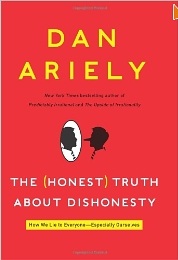
14.) The Honest Truth About Dishonesty: How We Lie to Everyone (Especially Ourselves)

In case it hasn’t been made apparent so far (look 4 books up), I’m a big fan of Dan Ariely’s work!
There are some bold claims in this book (that, perhaps, honesty is but a choice between benefit from cheating and our psychological motivation), but Ariely makes some compelling arguments to back up each point addressed.
As with Predictably Irrational, you’ll come away with a lot of questions, but in a good way: you’ll begin to re-think things that were formerly “obvious” in the context of what you just learned from Ariely.
Many people (myself included) have commented on how powerful the last two chapters are in particular: is there ever a context where cheating becomes socially acceptable?
Ariely forces you to ask these and other meaningful questions, and the result is a very powerful message with some great research & examples to comb through.

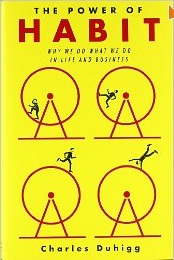
15.) The Power of Habit (Why We Do What We Do)

This book came highly recommended, and I enjoyed it, but I have some thoughts…
While the author does a great job of splitting up habits into appropriate sub-groups (habits of individuals, habits of successful organizations, habits of societies) and in showing how habits actually operate in the brain there is one shortcoming…
The book doesn’t show you how to break any habits!
Maybe my expectations were set for a different kind of book, but I found the lack of this aspect being addressed as a bit un-fulfilling.
All that said, the book is still a very easy read and a great look on how habits manifest in the brain.

16.) Brainfluence: 100 Ways to Persuade and Convince

This is another book that focuses more on serving up “bite-sized” analysis of multiple studies rather than diving deeply into a few.
As such, it serves as a fantastic jumping-off point and one of those “rabbit hole” books that I mentioned above: you’ll find yourself following up on multiple experiments in order to learn more.
One fantastic thing that Roger Dooley (see his very enjoyable blog on Forbes) has done is to break these studies up into separate categories (something that was failed at in the Yes! book above).
With sections like ‘Brainfluence Copywriting’ and ‘Brainfluence Branding’, you can tell what sort of studies you are about to get into.
In some instances, I found the sources to be somewhat lacking: links to other books instead of the actual studies, for instance (but don’t let that stop you from picking up what is an otherwise great read).

17.) Neuromarketing: Understanding the Buy Buttons in Your Customer’s Brain

This is, frankly, one of the best beginner books for those interesting in neuromarketing or “brainy marketing” as it is so affectionately referred to.
This means two things:
  1. The book is a very easy read; studies are not cited in-depth and the content can be easily consumed
  2. If you’re not new to this space, this book can seem a little simplistic
For instance, you could read my post on how to create viral content and cover a whole section of this book on “arousing emotions from buyers” in a single blog post, but if you’ve never encountered this stuff before, this book (along with Influence, #2 on the list) are must-haves for beginners.
Those who have read a few of these books already can probably give this a pass.

18.) The Branded Mind

This book is not an easy read. That being said, it isa rewarding read if you can make it through.
In essence, Du Plessis makes the argument that emotions are not in conflict with rational behavior, and that they in fact can cause rational behavior.
As mentioned though, this books requires some patience: if you love pop-psy only, be prepared for a challenge, this book reads more like a college textbook than a “I’ll kill 5 minutes by reading this”.
I struggles with the book a bit more than usual until I came across this fantastic review which recommends a revised reading order.
Bottom line: if you’re willing to put in the effort, you’ll get a lot out of this book, this is definitely one of the most compelling & challenging books on the list.

19.) The Paradox of Choice: Why More is Less

I really enjoyed this book, it makes you think a lot about, well… the paradox of choice: is having a ton of options at your disposal good for the brain?
Schwartz argues that decision-making was a lot simpler years ago, and while the majority of the book focuses on a “buying angle” (see things like buyer’s remorse and others which are closely related to choice), the lessons here can be carried to many of life’s aspects.
An abundance of choices has a tendency to trick our brain into thinking a lot of choice is a good thing, when that is not necessarily the case.
While Schwartz is very much an academic, the book reads quite fluidly and won’t trip you up with an abundance of scientific terms, although each point made is backed up quite eloquently.

20.) Brandwashed: Tricks Companies Use to Manipulate Our Minds

This is one of those amazing crosses between understanding marketing to utilize it for your entrepreneurial endeavors or to simply understand how brands try to persuade you.
Some of the examples aren’t so mind-blowing (groceries using crates to make fruit seem “farm-fresh”) but others are really interesting.
I wish Lindstrom would have done a bit more analysis on each study, as he seems to just take each at face value.
That being said, the studies cited are really interesting and very revealing in how easy it is for marketers to trick us.

21.) The Compass of Pleasure

The subtitle of this book is just too damn good…
How Our Brains Make Fatty Foods, Orgasm, Exercise, Marijuana, Generosity, Vodka, Learning, and Gambling Feel So Good
Ha!
If you’ve ever wanted to know why cigarettes are one of the most addictive substances of all time or how dopamine can turn your brain into a slave for pleasure, this is the book for you.
I would forwarn that this isn’t really a book to help addiction, but for understanding the nature of addiction and the processes in the brain.

22.) The Buying Brain

There is another book by Lindstrom (2 above) called Buyology that often comes highly recommended when discussing books of this ilk… but I would say that you should skip that book and get this one instead.
Pradeep creates a great overview of the emerging neuromarketing space and does so with a lot of good concrete examples.
I enjoyed that specifically because many books have a problem of simply citing the research at hand: as a guy who regularly reads research papers, I appreciate the exposure to new research, but I could have just read it myself.
This book avoids this problem by giving “actionable” (even though I hate that word) steps for implementing.

23.) The Secret Life of Pronouns: What Our Words Say About Us

You all know that I’m very interested in the psychology of language and in particular, howpsychology plays a role in storytelling.
This books digs into how language can reveal a lot about a person.
Some archetypes that are focused on include gender, affluence, liars, sadness, introverts vs. extroverts, and a variety of others.
While the research in this book was excellent (and often collaborative), I wanted more!
I felt like more examples could have been used in particular, but as for what’s there, it’s great.

24.) Mistakes Were Made (But Not By Me)

If you head waaaaay back up to #1 on this list, you’ll see that I’m an Elliot Aronson groupie.
If I could define this book in one word though, it would be: frightening.
Even more so than Ariely’s contributions, this book exposes how everyone is at risk of refusing to admit to their mistakes, even when the evidence is conclusive.
The research is accurate and cited appropriately, the book is still an easy, enjoyable read, and it’s from the guy who wrote my favorite social psych book of all time (with a talented co-author)…
What’s not to love! :)

25.) Social Engineer: The Art of Human Hacking

While this book specifically addresses social engineering (surprise), there are many psychological aspects that turn this into a very intriguing read on influence.
The book definitely has a very… antagonistic approach, but that’s because of the subject matter (people are referred to as “victims” and the activities are defined as “exploits” and “attacks”… because that’s what they are).
It’s kind of like watching those shows where a former thief shows the homeowners how easy it was to break into their house.
Except with this book, manipulation is the subject at hand.

26.) The Lucifer Effect: Understanding How Good People Turn Evil

This book focuses on the findings from the legendary Stanford prison experiment.
If that research has fascinated you in any way, you need to check this book out; it essentially offers an “inside look” at much of the data from the study, including things like transcripts.
It’s a compelling look at how even “normal” people fall into the roles of situations that many of us in the first world can hardly imagine happening (or would like to deny).
The last chapter is also quite intriguing for those familiar with the experiment: the author outlines a program intended to build resistance to mind-control strategies.
Scary stuff, but a necessary read.

27.) Obedience to Authority

Another book that is a “tell all” about (yet another) fascinating, provocative, even horrifying psychology study known as theMilgram experiment (after the lead researcher).
If you are unfamiliar with the study, it was meant to test whether or not people would obey authority even when they were asked to do something that they knew was wrong (in this case, shocking other participants, or at least believing they were).
It details many accounts of participants showing signs of severe distress, yet continuing on with the applied shocks as actors in another room (pretending to be other subjects) screamed cries of pain.
This book is a necessary read in understanding the construct and inherit dangers in authority.

28.) The Optimism Bias

Tali Sharot’s in-depth look is one of the better efforts to analyze the current research (along with Sharot’s own research) on optimism, memory, and their connections to our emotions and actions.
My single gripe with the book is that it is too long. I wouldn’t normally make a statement like this, but what I mean is that certain parts of the book feel a bit wordy, although given the topic and the tendency to pick apart certain aspects of research, it’s understandable.
I still feel like the content could have been more concise, but as for what’s there, it’s great.
This is no pop-psy self-help book, this takes a look at some incredible research from a leading expert.
Definitely worth picking up if you’re interested in neuroscience and studies on memory.

29.) Mindfulness

Harvard Professor (and author) Ellen Langer would assert that “robotic” behavior (mindless) can lead to a lot of pain in life.
I would agree, and the fact that so many other books on this list show just how susceptible we are to that sort of behavior, I’d say it’s a problem worth worrying about.
The aim of this book is therefore to be more “mindful” of our actions and to notice when automatic behavior begins to take over.
Again though, as a few disappointed reviewers have noted (read the description, sheesh…), this is NOT a self-help book, the focus is more on the process rather than a “hoo rah, change your life” kind of attitude.
Not that books like that are wrong in anyway, it’s just not what this is.

30.) Sway: The Irresistible Pull of Irrational Behavior

While I did really enjoy this book, there is certainly some merit to the top critical review on Amazon: “This book is a rehash of other, better books.”
That’s not to say that Sway isn’t an enjoyable read, it’s that it has predecessors that dive into concepts more deeply.
One of these is Influence (#2 on this list for a reason! :)), so at the very least, the book is in good company in terms of the things it talks about, it just did so much later and from a bite-sized perspective.
Again though, this book can serve as a fantastic “rabbit-hole” read that helps you find a TON of other great studies to check out.
The content is also quality stuff and will be new to you  if you aren’t an avid reader of psychology books, so don’t be afraid to give this one a go.

31.) Redirect

Wilson’s focus on this book can be summed up in two large, overarching points (IMO):
  1. Using the process of “story editing” to change our perception
  2. That what is true of culture is also true of individuals
Again (noticing a trend here?), this book seeks to understand and to pass on knowledge, not to help you change your life.
(Although obtaining this knowledge would certainly help with that)
This book, being all about subtlety and subtle changes, does a good job in giving relevant examples that make somewhat opaque descriptions a lot easier to relate to.
This is a very interesting book and one of few that strays into the positive psychology territory, definitely worth checking out.

32.) Brain Rules: 12 Principles for Surviving and Thriving

I really liked one reviewers stance on this book: “It’s like MythBusters for the brain!”
Throw misconceptions like you can’t teach an old dog new tricks out of the window, because Medina does a great job of finding relevant research to put claims like that to bed.
Funnily enough (or perhaps not), this book often appears on leadershiplists, despite not being an outright leadership or management book.
I’d say that it’s main two topics seem to hinge on productivity and relationship management, so it is easy to see why a business and leadership oriented crowd would enjoy this book.
For everyone else, it is a very easy read and very much worth checking out.

33.) You Are Not So Smart

Call it pop-psy all you want, this is one of the funnest books on this list!
Largely dealing with fallacies in our minds that happen to make us look very stupid when they’re in action, McRaney takes topics that are largely known by those with an interest in the field (like the Dunning-Kruger effect) and creates an entertaining read on otherwise well-covered studies.
The thing is, the presentation makes this book worthwhile even if you have already heard of a few of these, and McRaney is a great writer (his blog was featured on my big list o’ blogs that are awesome and not about marketing).
If you’re interested in how your brain is sabotaging you and in finding out more about the delusions we all hold, this book is the perfect place to start.

34.) What Makes Your Brain Happy (and Why You Should Do the Opposite)

Take this as a more serious version of the book above (see, I’m getting better at grouping!).
Largely concerned with cognition and specifically with cognitive biases, David DiSalvo makes this book stand out in quite a few ways.
The research isn’t rehashed like many books you’ll find in this space. Not only that, there are tactics and resource materials included in the book.
My only problem with these is that they are clumped near the end instead of being sprinkled about the many great examples.
An overall exciting book with a lot to offer, I’ve read this one very recently and was happy that I did.

35.) Incognito: The Secret Lives of the Brain

This book is all about the levels of consciousness in the brain, as as we’ve seen, you’re brain isn’t just the thing you think you control.
While the examples in this book are quite interesting, considering it is a “real” neuroscience book, I expected a bit more from the research.
That is, I felt there needed to be more complimentary research for certain positions (like Aronson is known for).
Despite that, Eagleman has put together a seriously fascinating list of studies that I will shamelessly steal and write about here! ;)
Seriously though, the writing is captivating, if nothing else, you’ll learn how to write attention-grabbing headlines as Eagleman sends you page after page into highly interesting findings on our unconscious.

36.) The Game

“Wait just a damn minute, what is this book doing here?!”
Allow me to address your concerns: while The Game is largely focused around the PUA (pick-up artist) community and on picking up women, the book and the community at large have surprising ties into psychological research (and a hefty serving of ‘broscience’ as well, don’t be fooled).
As an example, the pick-up artist technique of “escalating kino” (increased touching of someone you are interested in, beginning with their shoulder or arm) is backed by real science: oxytocin and dopamine play an integral role when touching or being touched, and even in business situations, a better handshake has a noticeable effect!
Again, this book is more on practice of some sound science in action; I’m not saying everything here is 100% backed by science, or that you should be courting your customers out on hot dates, but it’s hard to deny this book’s close ties with influence when it comes to a very specific spectrum.

37.) Out of Character

Just what exactly is happening when someone “breaks” character?
Is character even concrete, or is it more like a shade of gray?
I found this book really fascinating in it’s singular focus on character and the psychology of how external events impact it.
Living a humdrum life often makes understanding these crazy acts hard (not necessarily a boring life, but one less extreme by comparison), and this book takes a look at a lot of examples that show us that if we were in similar circumstances, we’d be very likely to act in a similar manner.
Great examples, great research, and a great focus make this a must-read.

38.) Blink

As per my usual review style, I have two comments about this book (good and bad).
The good is that the studies presented are interesting, and Gladwell does a superb job of showcasing how people are able to develop a “sense” about things; it becomes one of the more interesting books on the unconscious because of this.
The problem with the book is apparent though: it’s been pointed out by many others. This book seems like a collection of short stories, and not a unified idea.
That’s fine for books like “75 Ways to blah”, it’s an acceptable writing structure, but this book isn’t about that, and when in comes to this cohesion, it falls flat.
Putting that aside, the different sections are far too interesting to pass up for this general lack of unity.

39.) The Person and the Situation

This book is very straightforward, but I like that about it!
It’s obviously about situational influence and the effects on our decision making process.
That being said, the authors (Gladwell is one) do a great job in demonstrating the many types of faulty logic that we are prone to in a variety of environments.
This book almost reads like one of those great textbooks that you had in college: the one’s that you actually enjoyed, even though they were supposed to be academic.
I would classify this as an introductory book, however, so keep that in mind if you are very familiar with the field.

40.) The Psychology of Attitude Change and Social Influence

Zimbardo is back!
If I could sum up this book in a single phrase, I would call it a “more academic Influence“.
What I mean is that the book takes a very scholarly approach to the psychology of influence, but is perhaps a little bit less practical than Cialdini’s work.
For a true academic understanding of persuasion though, this book is fantastic.
It came highly recommended from a former professor of mine, and I’m glad I picked it up.
If you enjoyed the former recommendation at all (the one that covers Zimbardo’s prison experiment), you will need to pick this up.

41.) Situations Matter

I really enjoyed the writing style of this book.
Considering my true role at this blog is to take interesting psychology and neuroscience research and turn it into actionable, digestible posts for readers, I can appreciate when an author has a fun writing style to keep things engaging (I wish I wrote like this!).
That being said, it’s not for everyone. The research, however, is enjoyable by academic or laymen readers alike in my humble opinion.
I’d sum the subject matter of being about the psychology of “context”, the implications are pretty powerful (for instance, “Who we love is more explained by geography, familiarity and state of mind than we realize.”)
One of those books that has a knack for getting your brain to ask intriguing questions… about itself!

42.) The Willpower Instinct: How Self-Control Works

This actually is a book that falls squarely into positive psychology, but it is, bar none, one of the best out there.
Self-control & work ethic go hand-in-hand in my opinion: many people WANT to work hard, but it’s self-control that prevents them from doing so (and let’s be frank here, everybody suffers from a lack of self-control from time to time).
If you are interested in applying psychology to improve yourself and your mind, this is the book for you.
If not, you’ll still walk away with a great understanding of how self-control works in our minds.
This book is practical, the science is sound, and the author (McGonigal) is highly recognized: I have no hesitation recommending this one.

43.) Beyond Culture

And on the other side of town… we have this book.
This book is almost the opposite: it’s not actionable in any way (that I can see), but the understanding provided by it is enormously important.
I have a lot of praise for this book in that specific regard, in the same way that I once overheard someone talking about Guns, Germs and Steel saying: “If you read that book, you’ll find it hard to be racist.”
Funny, but it makes a compelling point: we aren’t often educated on understanding others, and while GG&S looks at human evolution and human history, this book is largely concerned with cross-cultural human psyche and it’s implications on our interactions.

44.) The Tipping Point

As with much of Gladwell’s work, I found this really interesting, but maybe a bit short of the hype surrounding it (there was a ton of hype, so it’s hard to approach this book with neutral anticipation).
Gladwell would suppose that there are 3 types of gifted people who are essential to “sticky” ideas: Connectors, Mavens and Salespeople.
While all of the information is great on explaining that there are critical aspects of things that become “epidemics” or “go viral”, he doesn’t really get into how that happens, just that it does.
Now, it’s not like I was looking for a “how to create a viral campaign” from this book, but the examples are lacking in that area.
Still, a highly important book, and it references the monkey sphere, so I needed to include it. :)

45.) The 48 Laws of Power

I can’t wait to rile up people with this choice!
This book is a great example of fantastic book marketing: the ideas in this book are sound, and as mentioned, although it is one of the books on this list that aren’t particularly “sciencey”, the ideas discussed are often backed by REAL research elsewhere.
What the book does well in it’s marketing is that it creates this ideal that these are some secret laws for the inner Machiavelli in us all (despite that The Prince was written as satire).
The funny thing is, some of the ideas are not all that devious, it’s just smart interpersonal relationship & persuasion advice.
I’ve heard that rapper’s love this book, it’s like the book version of Scarface… yet as I mentioned, despite it’s fantastic marketing and seemingly cynical nature, it’s just really good advice on interacting with people.
I would warn that you shouldn’t let the sometimes negative messages detract your from enjoying this (don’t take an “exploitative” view of persuading people).

46.) How to Win Friends and Influence People

With the reach that this book has had in it’s long lifetime, it’s unlikely that you’ve never encountered it before.
In order to mix things up a bit (and since this book is so well known), I thought I might offer some fantastic insights from one of my favorite Amazon reviews of all time:
The advice is largely sound, but I think the reader should keep in mind the context within which this book was written… [it was] intended primarily as a companion book to Dale Carnegie’s classes on how to be a good salesman.
…these techniques work very well in the context of sales and public relations, i.e., in relationships that are not expected to be deep and/or long-lasting.
What I found most interesting was that the last chapter… was to describe those individuals with whom none of Dale Carnegie’s techniques work. In this unpublished chapter, Carnegie wrote that there were some people with whom it was impossible to get along. You either needed to divorce such people, “knock them down,” or sue them in court.
Why is that chapter absent from this book, you ask? Well, Dale Carnegie was in the middle of writing this chapter when he was offered a trip to Europe, and rather than complete this last chapter he decided to take the trip. The uncompleted book was sent off to publishers, and Carnegie shipped off to Europe.
Interesting stuff to consider before you dig in!

47.) Strangers to Ourselves

Your conscious mind isn’t always in control.
If many of these books on the brain teach you anything, it’s probably this.
This book is one of the biggest jolts in this category of understanding that concept; it’s definitely a psychology book, but the questions it brings up almost make it feel like the book was written for philosophy majors.
While it’s an “easy read”, it’s certainly challenging to the mind, I didn’t find the research as compelling as some other similar books, but the questions raised by Wilson are by far some of my favorites.

48.) Sleights of Mind

The main issue that this book tackles is more on how we are influenced, with the author taking a very specific look at the tricks of “magic” and some related neuroscience studies.
This book therefore reads like “The Psychology of Magic”, and if that sounds interesting to you, this is a must read.
As for practicality, I would say this book is another one of those books that is about understanding, and through this understanding there are some practical applications to be had.
All that being said, to me it was damn interesting, and it’s one of the most unusual books on this list.

49.) Why We Buy

I’ll agree with the many reviewers of this book that it ends… uneventfully, shall we say.
It gets very sales-y for the author’s company, which was a huge letdown.
The rest of the book is a fun read. Be sure to verify claims by checking the actual studies, as this is definitely the ‘fun’ side of science.
Still, it’s interesting to see some data on how people shop.
Some of the examples definitely left me scratching my head, especially in areas of business where I’m clueless, such as product placement in grocery stores.

50.) The Invisible Gorilla (How Our Intuitions Deceive Us)


10 Psychological Research Studies to Help You Tap Into Human Behavior and Increase Conversions

n order to prosper in the world of online sales and conversions, marketers must understand the basic principles of human psychology. Not confined to being "niche specific", understanding how our brains work can go a long way to helping us understand how we can successfully (and ethically) move people towards saying 'Yes'. Research into social and consumer psychology has come a long way, and there are a lot of lessons to be learned from these studies that smart marketers can apply right away. Below I've outlined 10 fascinating psychological research studies that will help you learn how people "tick", as well as how to apply them to increase conversions. 1.) Asking A Little Goes A Long Way... For Conversions Although at first glance it may appear to be counter-productive, one excellent way to find insights that can increase conversions is to stop focusing on why people say "yes", and zoom in on what makes they say 'no'. One research study focused on testing the change in charitable donations to the American Cancer Society by adjusting how requests were made in person (door-to-door). The researchers tested between two different request lines: "Would you be willing to help by giving a donation?" "Would you be willing to help by giving a donation? Even a penny will help." A small, subtle change; one might expect a difference, but not a statistically significant one. Surprisingly though, researchers found that those who were asked the second line were twice as likely to donate to the charity, jumping up to nearly 50% from the 28% response seen from the first line. The research concluded that people may be hesitant to take action when parameters are not set, in this case, they may have become paralyzed when not giving an "acceptable" minimal amount, and therefore chose not to act at all. One might think that this request would result in donations of a smaller amount overall, given that people were encouraged to donate "even a penny". Shockingly, researchers found that there was no difference in the average donation made per contributor, meaning that the second line did not cause people to donate in a lower amount overall. Lesson learned: Defining ideal parameters (or minimums) can help people break through "action paralysis". 2.) Personalization Makes People Satisfied Customers Waiters were able to successfully increase their tips by over 23% versus a control by changing a single aspect of their service. Which aspect do you think it was? A bigger smile? A "perkier" introduction? Surprise of the month: it was mints that allowed for such big tip increases. In a research study published in the Journal for Applied Psychology, researchers tested the conspicuous power of mints to effect the amount of tips that customers left, all other aspects of their service remaining the same. In the study, three variations were conducted: The first group included waiters/waitresses giving a single mint with the check, and also no mention of the mint itself. This increased tips by around 3% against the control group. The second group changed things up by having the servers bring out two mints by hand (separate from the check). In addition, they mentioned them to the table (ie, "Would anyone like some mints?"). This saw tips increase by ~14% against the control group. The last group had waiters bring out the check first along with a pair of mints. A short time afterward, the waiter came back with another set of mints, and let customers know that they had brought out more mints, in case they wanted another. This last group saw the increase of 23% mentioned above. What does this tell us about consumer behavior? That they just loooooove mints? No! Researchers concluded that it was the personalization aspect that won over patrons hearts (and their wallets). People enjoyed the follow up much more so than the mints they received: the fact that the waiter came back to see if anyone needed more mints left a positive impression after a critical marketing moment, the initial time after the sale. The greatest part about this study is that it reveals that nearly anything can be used as a follow up to generate this effect: free training for your product or service, a follow-up guide, an additional module that's not mentioned on the sales page, just follow up post purchase with a small gift and consumers will love you for it. Lesson learned: Personal follow-ups (especially with small gifts) go a long way to creating happy customers. 3.) Head Starts Lead to "First Place" Loyalty Have you ever wondered what makes online gaming so addictive? Gamers are probably already subliminally aware of a few aspects, the acquisition of "points" (in the form of new levels, upgrades, even new experiences) being one of the most influential ones. In fact, it's been argued that having a "gamer" style personality might make you a good SEO consultant! As for conversions, point systems have long been used to increase customer loyalty, but are they as optimized as they could be? Consumer researchers Joseph Nunes and Xaiver Dreze set out to answer this very question, and their results were surprising. In the now somewhat infamous carwash study, Nunes & Dreze tested the effect of "loyalty cards" by handing out sets of cards (with stamps) that allowed users to get a free car wash after eight or 10 previous washes. The thing was, they handed out two different types of cards to participants (those sneaky psychologists): One card required the minimal eight stamps to get the free car wash, but had no stamps "pre-checked" (all of the stamps were blank) The second card required 10 minimal purchases, but two of the stamps were already checked off (therefore, in reality, eight washes were still needed to get the free wash) This seemingly similar stamp system created some surprising results. The researchers found that only 19% of those with the first card came back enough times to get their free car wash, whereas 34% of those with the second card made it to the free wash (labeled the "head start" group). That means that by giving folks a 'boost' in their loyalty program (even though comparatively, both cards were the same), researchers were able to nearly double the loyalty of the customers using card two. The results seem clear: People are more likely to remain with (and complete) loyalty programs if you initially offer them some evidence that they've already made progress towards completing their next goal (throw in a few "bonus points" and the inner-gamer in us all will want to acquire more). Lesson learned: Loyalty programs are more effective when people can see "instant" progress. This progress makes them more likely to stick with it until completion. 4.) Admitting Your Faults Works When You Highlight Strengths Can it ever be good to admit when you come up short? According to research from social psychologist Fiona Lee, it can. In a study to measure the effect of admitting to faults, Lee and colleagues conducted a test that had participants reading one of two fictitious company reports. Both reports listed reasons why the company had done so “poorly” the past year (remembering that these were fake). The first report had the company listing strategic decisions as the main reason for poor performance. The second report had the company listing exterior events as the main reason for poor performance (economic downturn and increased competition). The results? Test subjects viewed the first company far more favorably than the second. Lee also found (after examining hundreds of these types of statements, over 14 real companies) that companies that admitted to faults also had higher stock prices the following year. Why? Lee's conclusion was that admittance to shortcomings in things like strategy showcased that the company was actually in control, despite their faults. Blaming outside occurrences that couldn't be controlled (even if true) often had the skeptics in the study viewing companies as not having the ability to fix the problem, but also as false or flaky. Lesson learned: When mistakes can honestly be attributed to strategy or an oversight, admitting to them can lead to more trust if we define exactly what changes are going to be made to fix them. 5.) Urgent Calls-to-Action Only Work When a Solution is Given Creating copy and sales pitches that come off as "urgent" is one of the oldest marketing tricks in the book. Additionally, the principle of "scarcity" is deemed to be one of the 6 pillars of influence as mentioned by Robert Cialdini. I have research that suggests, however, that these messages that invoke a sense of urgency are essentially useless unless there are very specific instructions given as a follow up. How so? In a study by Howard Leventhal, participants were tested to see what their reaction (and follow up percentage) would be when given an urgent, fearful message. The message involved the disastrous effects of the tetanus disease: each participant was given a pamphlet that spared no detail of the results tetanus can have on the body. As with any good psych study, situations were different for the control and experimental group: The control group received a pamphlet with just the information on the dangers of tetanus. The experimental group received a similar pamphlet, but theirs also included information on where and how to schedule an appointment to get vaccinated. The results? Participants who received the second pamphlet (with follow-up info) were much more likely to take action on getting vaccinated, and just as interesting, were more receptive to processing the information on the dangers of tetanus. This made them not only more engaged, but more likely to "make moves" as well. The thing is, the info provided in the second packet wasn't all that comprehensive. This lead to Leventhal concluding that people are susceptible to blocking out information that evokes a sense of urgency if they aren't given instructions on how to specifically deal with it. Meaning, people were apt to persuade themselves that, "I don't need to worry, this won't affect me," when given information they didn't know how to act on. Furthermore, people with the follow up info felt better prepared and were therefore much less likely to "put it aside" and out of their heads. Lesson learned: Evoking a sense of urgency works, but without information on how to act, information paralysis can begin and people will block out the intended message. 6.) Don't Listen to People: They Like Being Labeled! Most people (especially true in the Western world, particularly among Americans) would say that they enjoy being an "individual", and don't like being labeled. Yet, research has found, that when nudging people to get involved, most people respond favorably to being labeled. "It's not just a phase mom!" This isn't a tactic to persuade teenagers either, in fact, the research study in question analyzed the voting patterns of adults to see if labeling effected their overall turnout. Setting the stage: After being casually interviewed about their own personal voting patterns, half of the participants were told that they were likely to vote since they had been deemed by the researcher to be more politically active, and the other half weren't told anything. The catch: Participants who were told that they were more likely to vote were chosen randomly, meaning that they weren't actually more likely to vote, they were just labeled as such. The result: Those in the group "labeled" as more likely to vote... ended up voting far more often! In fact, on election day, that group had a 15% higher total turnout than the control group, despite the fact that they were selected at random. It seems that when we are labeled as being a part of a particular sect, our brain seeks to maintain this consistency (even if it didn't exist before!) and therefore causes us to act like those we've been labeled as in order to maintain a consistent personality. In a nutshell: we like being consistent, and when we're told by someone that we are "a part of ____ group", we are more likely to respond as such. For conversions, this means you need to evoke a similarity between your future customers and your current customers: ie, "Join over 215,000 of your fellow SEO addicts enthusiasts who get our Moz Top 10 newsletter!" (Rand, my bill is in the mail ;)). Get people to imagine themselves in a favorable group (people who vote are viewed more favorably by most) and they will take actions to remain a part of that group. Apparently, it's not always just a phase! Lesson learned: People will take action in order to maintain a consistent personality when they are "labeled". 7.) "Instant" Gratification Makes People Move If there is one thing our brain loves, it's getting stimulation immediately. In fact, the brain loves instant gratification so much, there has been numerous research on determining the results of some people's inability to control against this force, with particular interest in how deferring gratification can help us in achieving success in life. Powerful stuff! Fortunately, we're talking about the type of instant rewards that are not only good for our customers, but also good for our conversions. When deciding whether or not to “commit” to a purchase, customers (or in the case of building an email list, subscribers) are heavily influence by how fast they can increase their “utility”, or how fast they can receive gratification. In fact, several Magnetic Resonance Imaging (MRI) studies have shown that our frontal cortex is activated when we think about “waiting” for something. Conversely, our mid-brain gets excited when we think about getting something right away. You can tap into this knowledge by invoking something instant, even if you aren't selling something digital! (If you are selling something digital, this becomes even easier) Structure your copy to include words like “instant”, “immediately”, or even just “fast” (for non-digital products) to engage that mid-brain activity that gets us so excited. If you aren't selling something, using a lead generation freebie (such as a free trial) is a great way to build this psychological aspect right into your site's value proposition and design. The key is to present these instant solutions as a “fix” to a pain point, as gratification is hastily chased when our mind seeks to resolve an unfavorable problem. Lesson learned: People respond favorably to "instant gratification" and are more likely to take action when fast rewards are on the horizon. 8.) Chest Pounding About Low Prices Can Decrease Conversions "The lowest prices in town!" Works for some businesses, can be absolutely disastrous for others. In a recent Stanford research study, results concluded that "comparative pricing" isn't always as reliable as marketers think it is. In fact, asking consumers to internalize their price comparisons can result in them taking the opposite action that you want: they'll buy your competitor's product! The study goes into depth about the importance of 'implicit' and 'explicit' comparisons when it comes to price: Implicit comparisons occur when a customer takes the initiative to compare two or more products. Conversely, explicit comparisons are those that are specifically stated or brought up by the marketer or advertiser. To test the results of both, Simonson & Dholakia set up two separate trials. The first trial involved selling CDs on eBay. Specifically, the researches listed albums for sale like Pink Floyd's 'The Wall' (I approve!), and then "framed" the listings in two very distinct ways. The initial listing was always started at $1.99, and it was "flanked" (surrounded by similar listings) by the same album, but the price was set at $0.99 instead. Similarly, the second trial had the $1.99 album "flanked" by two identical listings, but this time the price was set at $6.99. Essentially: (flank) $0.99 album <---> $1.99 album <---> $0.99 album (flank) and... (flank) $6.99 album <---> $1.99 album <---> $6.99 album (flank) The results? They were conclusive: The CDs flanked with the more expensive options ($6.99) consistently ended up fetching higher prices than the CDs next to the $0.99 offerings. “We didn’t tell people to make a comparison; they did it on their own,” said Simonson. “And when people make these kinds of comparisons on their own, they are very influential.” In the follow up study, researchers outright asked the customers to compare the $1.99 offering with the other two. Buyers, perhaps surprisingly, became increasingly more risk adverse and more cautious of the offerings and in their likelihood to purchase any CDs: “The mere fact that we had asked them to make a comparison caused them to fear that they were being tricked in some way,” said Simonson. The findings show that customers often frame prices in their own minds in relation to the prices of adjacent (or similar) products, meaning it's not always optimal to go "bottom dollar". Additionally, if you ask explicitly ask customers to compare products, they may react unfavorably to your predictions: as this study showed, it can cause them to take less action overall rather than more. Lesson learned: Asking customers to compare price on a product cannot always have the intended effect, instead, strategies that evoke an "internal" comparison could be more effective. Instead of focusing on price, perhaps you should... 9.) Sell Customers on Time Benefits, Not Money Why does a beer company like Miller have a slogan like: "It's Miller time!" They sell inexpensive beer, so isn't it better to focus on this price advantage? According to researcher Jennifer Aaker, that would be a terrible choice for a company selling cheap beer. “Because a person’s experience with a product tends to foster feelings of personal connection with it, referring to time typically leads to more favorable attitudes—and to more purchases.” It's tough to sell beer based purely on price, the competition is massive and the price differences are largely understood (some people don't mind paying more for "premium" beer, it's an accepted fact that they have to in order to get quality). How about the memories tied to your favorite inexpensive beer though? The BBQs, the parties as a college kid, they way a few drinks makes you feel: all memories tied to beer, and all memories Miller hopes to rekindle with their focus on "time enjoyed" rather than "money saved". Jenn Aaker's study seems to back up this assertion: the experiment set up a simple lemonade stand and used three different signs and measure their impact. The three signs read as follows: “Spend a little time and enjoy C&D’s lemonade” (time) “Spend a little money and enjoy C&D’s lemonade” (money) “Enjoy C&D’s lemonade” (neutral) Aaker and her fellow researchers also set the stand up with two six-year-old operators, so it would appear legitimate (I don't know about you, but that's dang adorable!) Even with this simple lemonade experiment, the results were crystal clear: The sign stressing time attracted twice as many people, many of whom were willing to pay twice as much. Wow! In addition to this, another study was set up to test how people's internal valuation of things they already owned were affected by recalling time or money. To do so, researchers asked college kids about their iPods, specifically one of two questions: “How much money have you spent on your iPod?” “How much time have you spent on your iPod?" Care to guess the outcome? Students asked about how much time they spent on their iPod were far more favorable in how they later evaluated the enjoyment they got out of their iPod (despite being randomly selected). The researchers pinpointed what they believed to be the underlying cause of these results: One explanation is that our relationship with time is much more personal than our relationship with money. “Ultimately, time is a more scarce resource—once it’s gone, it’s gone—and therefore more meaningful to us,” says Mogilner. “How we spend our time says so much more about who we are than does how we spend our money.” So, sell customers on time and enjoyment from a purchase, because unless you're running a luxury brand like Ferrari (where customers do respond favorably to recalling price), you could be evoking less than positive reactions. Lesson learned: People often value their time more than money, emphasis on time spent or time saved can be a better value proposition than the money they might save. 10.) If You Give Too Much, You'll Get Less in Return If people don’t know where to go, they will always find an exit. -Rafal Tomal, Lead Designer of Copyblogger Media The last study I'd like to discuss with you directly relates to increasing the amount of action that people will take. If it can be summed up in a single phrase, the takeaway is this: choice overload kills conversions. In The Art of Choosing, Sheena Iyengar, demonstrates perfectly the adverse effect that too many options has on conversions in a groundbreaking study involving... jam. In her research, she conducted a study on the amount of flavors of jam that were available for participants to “taste-test” in two different displays. Her results give an amazing example on the effect of choice overload on consumers. During multiple Saturday afternoons, Sheena (who is a professor at Columbia University) set up two different displays at an up-scale grocery market, alternating between the amounts of jam that she had on display. On one Saturday, she would offer 24 flavors, and on the other, she offered only six flavors. On which day do you think more people purchased the jam? You might be surprised, but it was the day with only six flavors. Why? When people are overloaded by choices, social psychologists are aware that they will often resort to their safety choice of nothing, and then move along to something else. And that is exactly what happened in this study. The findings also point out an eminent danger: Despite the fact that the 6 flavor test had a higher percentage of people purchasing the jam, the 24 flavor variety had more people taste-testing the jam. Choice is demotivating only for actual purchases, because although the 24 flavor set up had 60% of people stop by to try the jam on display (compared to 40% for the six flavor display), the six flavor display had 30% of people make a purchase, compared to ONLY 3% in the 24 jam display. Marketers must be careful when offering too many options to customers, and must be especially careful of tracking the right metrics when changing up their offering amounts. Lesson learned: People are more inclined to take action when their choices offer variety but aren't overwhelming. Over To You What did you think about the 10 studies mentioned above? Any one in particular pique your interest? Let me know in the comments below, and thanks for reading!

Translate